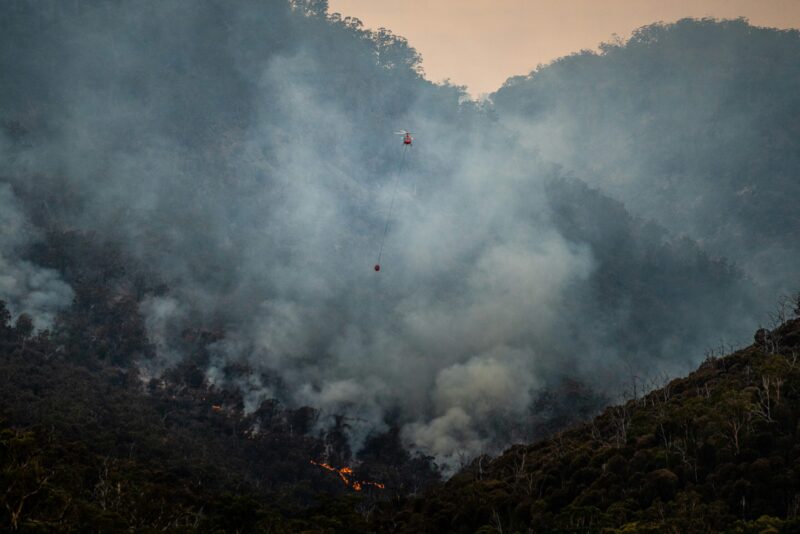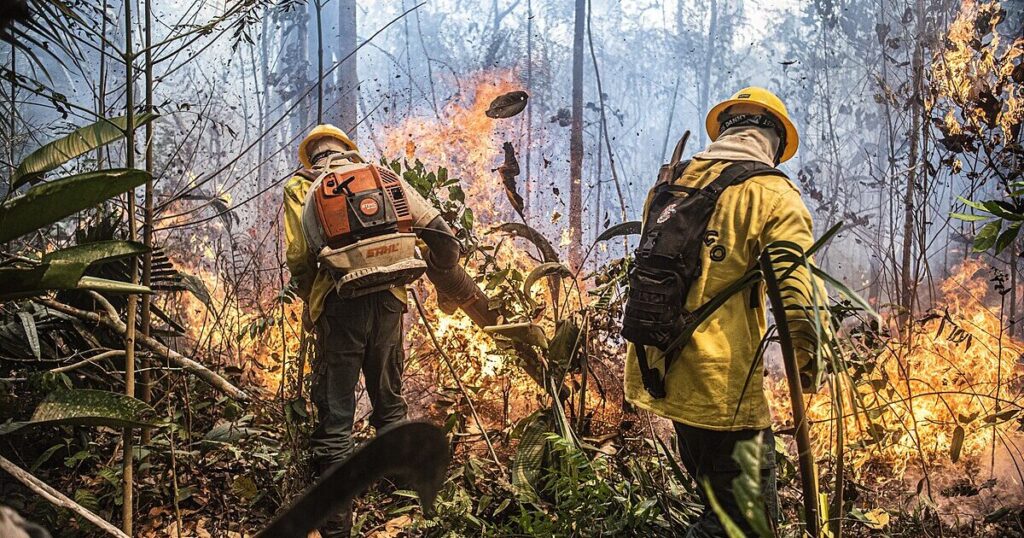
As wildfires burned across parts of the UK, Europe and Canada this summer, attention naturally focuses on the fires happening today. But for land managers, an equally important question is what fire seasons will look like decades from now.
As dangerous fire weather arrives earlier and lasts longer, the calendar for activities such as controlled burning, fuel management and emergency preparedness may have to change too.
Our new study explores how that fire-weather calendar shifts as global temperatures rise from 1.5°C above pre-industrial levels – a threshold the world is rapidly approaching – to 4°C warming. We examine both how fire danger has changed relative to the late twentieth century and what those changes mean for the entire annual cycle of fire risk, from preparation and fuel management to periods capable of supporting extreme wildfires.
We show that, across much of the world, the period each year with weather conditions capable of driving large and destructive wildfires becomes longer even if warming is limited to 1.5°C – with 30% of the world showing an increase in length of season with fire weather level associated with the worst fires. At higher warming levels, those changes become substantially larger.
In many ways, however, this is not a new story. Previous studies, including several from the State of Wildfires project, have already shown that climate change is increasing fire risk across much of the world. We’ve found evidence that climate change is already contributing to extreme burned area in every region we examined, while future projections point to increases in the frequency and severity of extreme fire years across all but one region. The 2022 UNEP report Spreading like Wildfire similarly warned that extreme wildfires are expected to become more frequent as the climate continues to warm, even in this decade.
So why undertake another future fire study?
The answer is that we do not just investigate how much fire danger increases. Instead, we examine the entire annual cycle of fire weather.
In particular, we show how the windows for interventions such as controlled burning and fuel management shift as fire seasons begin earlier. In parts of Australia, Brazil and the United States, the onset of severe fire weather advances by as much as a week to a month at 1.5°C warming compared with the late twentieth century. Similar shifts are evident across much of the world.
This matters because fire management is not something that happens only during a wildfire emergency. Many of the most important actions occur beforehand. Controlled burns, vegetation management, resource planning, ecosystem restoration, and community preparedness all depend on suitable windows to act safely and effectively. If the start of the fire season moves earlier, those opportunities may need to move too.
We also examine the lower-fire-weather periods that remain outside the main fire season. These quieter periods help determine whether fire management can continue to operate on a largely seasonal basis or whether some regions may need to prepare for a more year-round approach to fire risk. The results suggest adaptation will require not only responding to more extreme conditions, but also rethinking when and how prevention activities are carried out.
There is some encouraging news. In several regions, while the period of very high fire weather expands, the intermediate-risk period that may be suitable for management activities such as prescribed burning also becomes longer. This suggests there may still be opportunities to reduce future risk, provided management strategies evolve alongside changing fire regimes.
Ultimately, our results reinforce two messages. First, limiting warming matters enormously. The difference between 1.5°C and higher levels of warming translates into substantial differences in the amount of fire weather experienced across much of the world. Second, even at 1.5°C, adaptation will still be necessary. Fire danger is projected to increase, fire seasons are expected to shift, and the calendar that land managers work to today may not be the calendar they need in the future – from the height of the fire season through to the period we prepare for the next season.
As a growing body of work has shown, reducing greenhouse gas emissions will limit the scale of future change to fire seasons around the world. However, as we have shown in this work, fire managers are starting to have the information needed to be better prepared for that change through smarter and more flexible fire management.
Full paper: Taylor et al. Future fire weather projections show the importance of mitigation and adaptation for dynamic fire management, NHESS. Open Access
Recent Articles
A look at Europe’s wildfire season of 2026
October 2026
When a wildfire builds a thunderstorm
August 2026