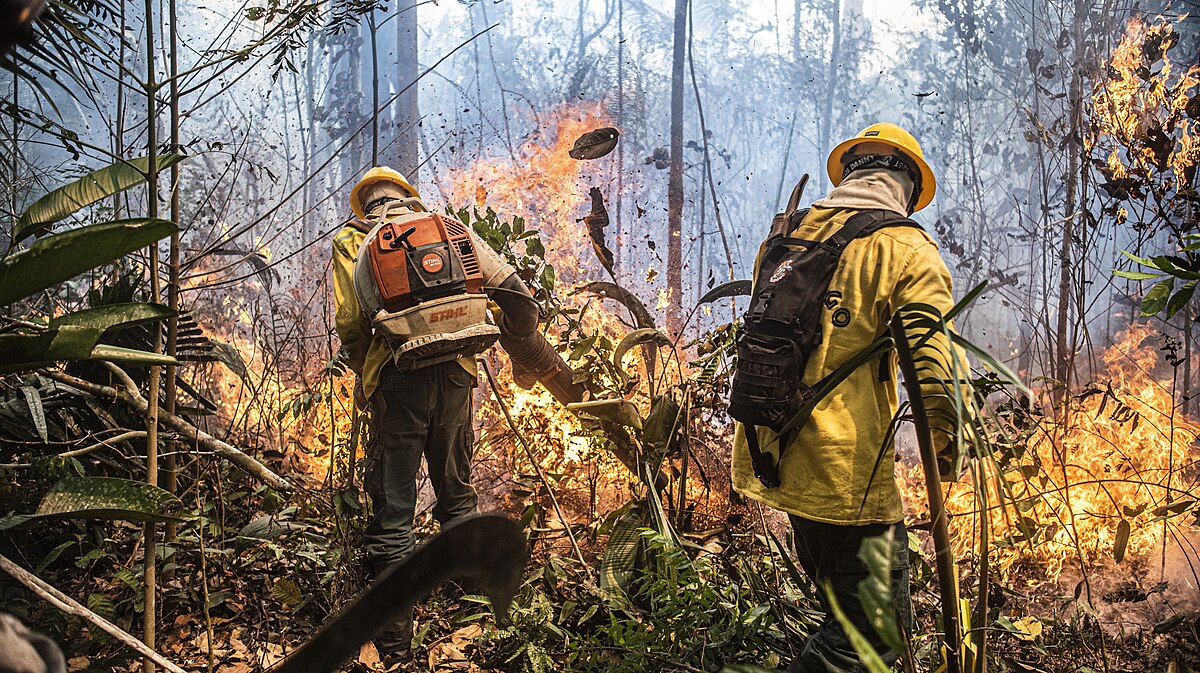
In a new comment piece published in Communications Earth & Environment, Renata Veiga, Maria Barbosa and co-authors argue that the growing threat of wildfires, amplified by climate change, is being overlooked in international climate policy, despite causing devastating impacts on vulnerable communities worldwide.
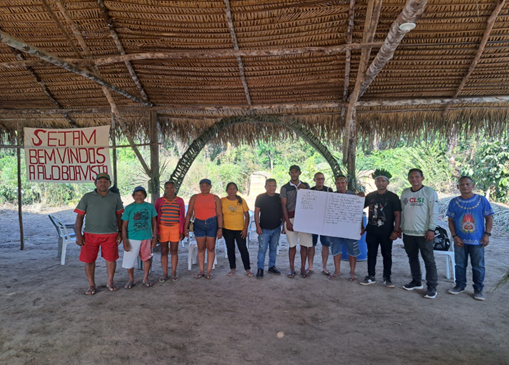
The research is based on a multi-stakeholder workshop in Brasília in September 2025 that convened representatives from local and Indigenous fire brigades, researchers from physical climate and fire science, social science and philosophy, civil society and climate finance organisations, and policymakers to co-produce evidence on climate-related impacts of wildfires, organised by Fiona Spuler and Julia Mindlin with the support of the BASE initiative led by Victoria Matusevich. The project drew on findings of the second annual State of Wildfires report, bringing together results from an attribution study of the 2024 wildfires in the Amazon and Pantanal biomes led by Maria Barbosa, with impacts reported by communities at the workshop and previous interviews led by Renata Veiga. During the workshop, community representatives and firefighters highlighted that the timing and intensity of the fire season have shifted, the dry season has lengthened, health conditions have worsened and food insecurity has increased, which confirms scientific findings on changes in dry season patterns investigated by Igor Ferreira.
The project also highlighted the need for collaborative spaces for exchange between science, policy and local and Indigenous communities. One of the members of the community fire brigades commented at the end of the workshop: “I learned that there are people outside Brazil who view nature with affection, faith, and, above all, science. And that brought me more faith in humanity.”
Findings from this project and comment were also shared at COP30 in Belem by Douglas Kelley and Maria Barbosa during the event “Wildfires: Science, Stories, and Strategies for Resilience in Amazonia” held in the UK pavilion.
Recent Articles

Build your own probability of fire models
February 2026
How 2025 Became the UK’s Record-Breaking Wildfire Year
February 2026